Appearance
Maximal Minimalism
Listen to the audio version of this text.
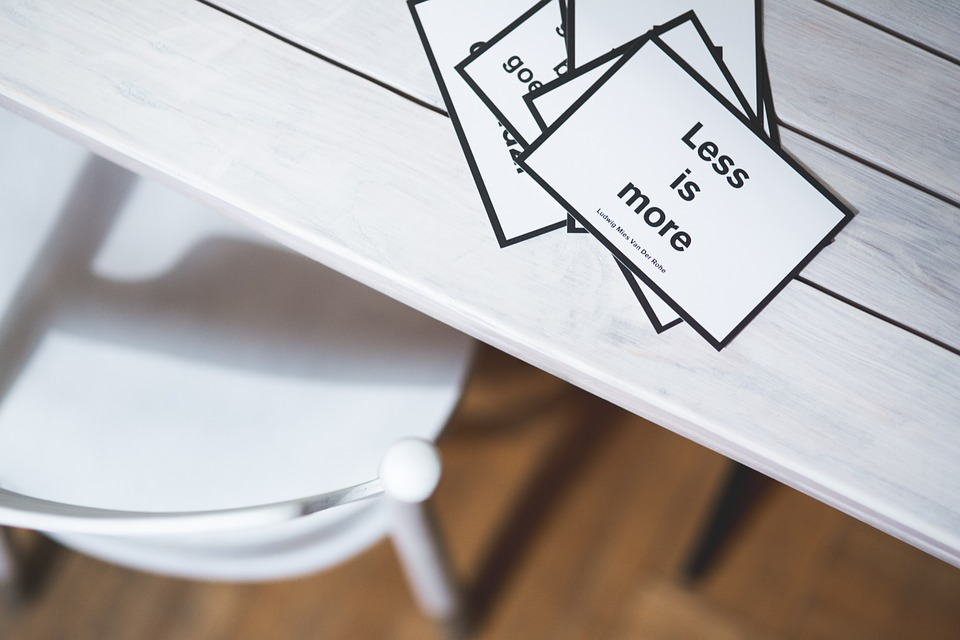
"Less is more"
Most of us have no doubt heard this phrase before. Don't add anything extra if it's not needed and you'll thank yourself later.
It is perhaps the simplest minimalist approach and a fine starter for anyone's design philosophy.
However, there is a way to refine it even further.
Think about how your tasks start to pile up after a while during project work or application development. It is inevitable that you'll have many different streams of work happening all at once. There comes a point where an approach of "less is more" is not an option because the project has grown very large and it has a lot of important moving parts to manage.
This is when it is useful to be maximal with minimalism.
The idea here is to point the philosophy of "less is more" toward each of the individual streams of work that are piling up. In a way, it is the opposite of a bird's eye view or a top-down perspective. We can help ensure elements and approaches work well together when we've made them work well on their own as single elements first.
During development and design, we are always seeking things that we are able to repeat and automate. This is, in fact, a kind of philosophical automation. Developing good habits for ensuring the quality of our individual ingredients makes the inevitable growth of a project tidier and easier to control.
We can't really prevent a project from becoming more complex over time, but we can make strong decisions about the individual elements that the project consists of. This affects the way we experience that complexity and gives us more control.